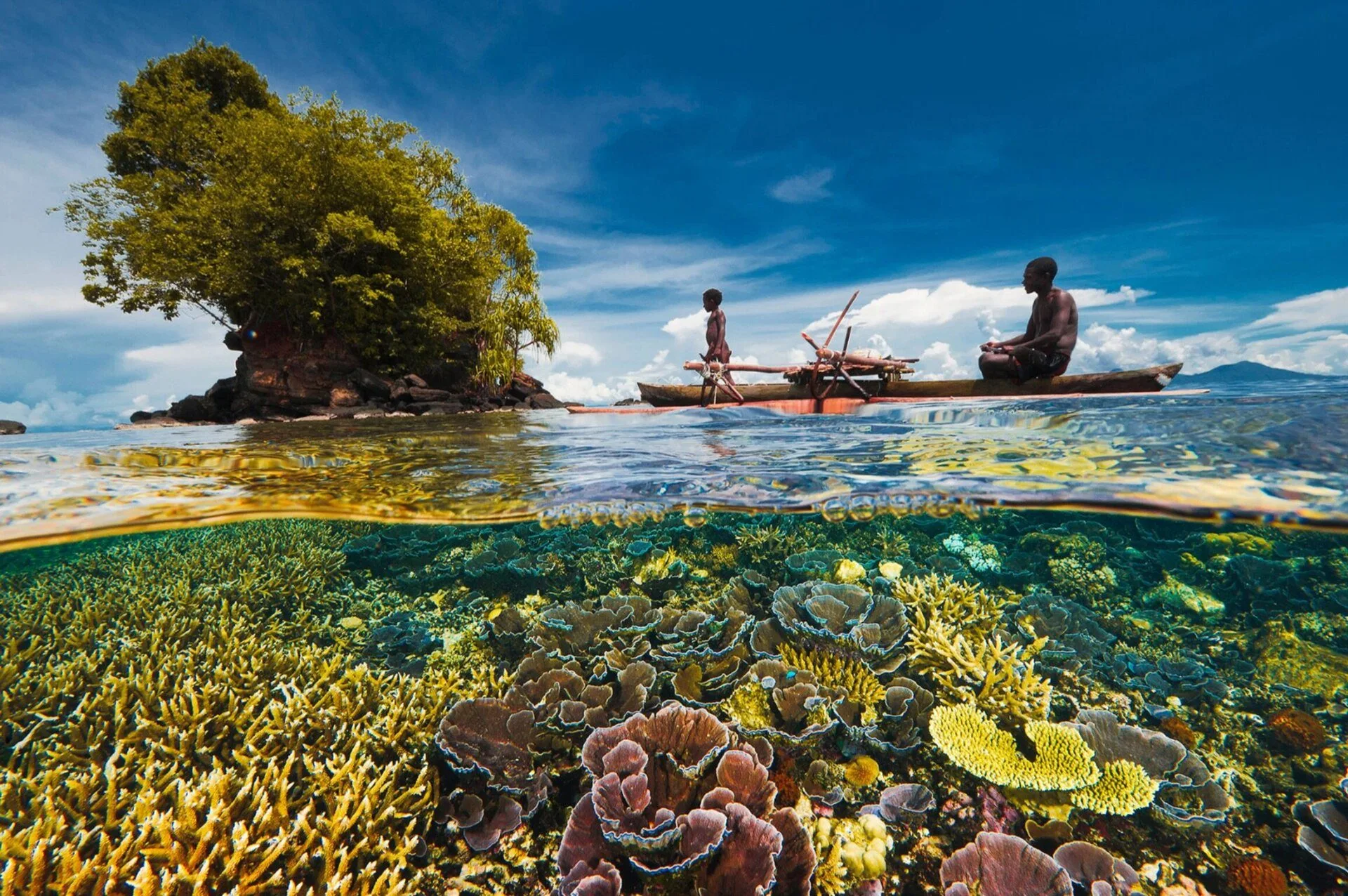
Bacalar Lagoon
A groundwater-fed lagoon in southern Quintana Roo whose microbialite reefs and water clarity are under pressure from runoff, sewage and fast tourism growth.
Evidence · AnnouncedReporting on the future of places
Region · 6 destinations · 17 stories
From the Mexican Caribbean’s cenotes and lagoons to Trinidad’s turtle beaches and Hawaiʻi’s green fee: destinations across the Americas testing what tourism can pay for.
A groundwater-fed lagoon in southern Quintana Roo whose microbialite reefs and water clarity are under pressure from runoff, sewage and fast tourism growth.
Evidence · AnnouncedUS island state where a 2026 lodging-tax increase, the Green Fee, is meant to fund conservation, climate resilience and tourism management.
Evidence · In progressA Honduran Bay Island on the Mesoamerican Reef where sewer connections show gains, while mainland rivers, cruise growth and land disputes press in.
Evidence · DocumentedA road inland from Puerto Morelos lined with cenote parks on ejido land, where land-use regularisation and aquifer protection lag behind visitor growth.
Evidence · AnnouncedA two-island Caribbean state with a forest reserve protected since 1776, a UNESCO biosphere reserve and community-run sea turtle patrols.
Evidence · In progressA Gulf of Mexico state with rainforest, reef and raptor-migration sites, two UNESCO World Heritage properties and a newly announced hotel programme.
Evidence · AnnouncedAsa Wright has protected a rainforest valley in Trinidad since 1967. Regenera Luxury is working with the Centre to turn that record into results that can be measured and verified.
A Trinidad rainforest valley has been protected since 1967. Turning that history into verified, comparable evidence is proving slower — and more revealing — than the reputation suggests.
On Trinidad’s north-east coast, leatherback nesting is protected by rules and guided by the community. The hotel on the beach scores highly — except on the one thing evidence depends on: monitoring.
From Bhutan's nightly levy to Palau's departure fee and Venice's day ticket, destinations are turning visitor money into conservation and community funds. The design, more than the price, decides whether it works.
Our evidence scale reads destinations from the outside. Hotel certification works from the inside, criterion by criterion. This is how Regenera Luxury’s method is built, how it compares with older frameworks, and where its limits lie.
"Regenerative" is an unregulated word on hotel websites. Six questions, a short guide to certifications and a list of red flags help separate hotels that can show what they do from those that only say it.
A guide to the fifteen destinations we profile, grouped by how they are trying to make tourism give back: visitor fees and limits, community ownership, nature and water systems, and living heritage. For each, what is being done and how well it is documented.
What separates a regenerative hotel from a merely sustainable one, and ten examples from Nepal, Kenya, Zanzibar, Trinidad, Switzerland, India and Canada: what each does, and how well its claims are documented.
Sustainable tourism asks how to do less harm; regenerative tourism asks whether a place ends up healthier, and who decides. The difference is real, but so are the critiques: vagueness, greenwashing and a shortage of evidence.
Cenotes, Bacalar's lagoon and the Mesoamerican Reef share one groundwater system. A guide to where regeneration efforts in Mexico stand, what is contested and how visitors can travel well.
Regenerative luxury asks high-end hotels to leave places better off and to prove it under independent audit. Where the term comes from, how it is defined, what it changes for a hotel and its destination, the strongest objections, and how to test a claim.
Regenerative travel promises to leave places better able to thrive, not just less damaged. Where the idea came from, what it asks of destinations, what it is not, and the questions that separate serious efforts from marketing.
International tourism set a new record in 2025. Arrivals, receipts and emissions are counted globally; what that volume does to particular places is not. The numbers, where the pressure lands, and the destination-level indicators that could close the gap.
Regenerative tourism is talked about far more than it is measured. Travellers’ stated intentions rarely predict behaviour, the academic field is young and mostly conceptual, and the data that would show whether a place is better off are scarce.
Since January 2026 visitors to Hawaiʻi have paid a higher lodging tax intended for conservation, climate resilience and tourism management. The first spending round shows both the promise and the weakness of a fee that is not ring-fenced.
On the Yucatán Peninsula, the water in a jungle sinkhole, a freshwater lagoon and a coral reef is often the same water at different moments. Destinations that manage them separately are planning for a system that does not exist.
Bhutan tripled its nightly Sustainable Development Fee in 2022 and effectively halved it a year later. Revenue is rising and international visitors are returning, but the money is pooled, and the discount expires in August 2027.
Regenera Luxury · affiliated with this publication
Regenera Luxury’s destination programmes in Mexico, Honduras and Trinidad and TobagoWhere Regenera Luxury works with destinations in the region
The Regenera Luxury Magazine · affiliated with this publication
Asa Wright Nature Centre: measuring the forestA Trinidad case study